India’s corporate sector spent a record ₹40,794 crore on CSR activities in FY 2024–25 — a 17% increase over the previous year, and more than four times what companies spent when the mandate first came into force in 2014.
That is a significant amount of capital moving toward social development. The question that matters for CSR heads, compliance officers, and boards is not whether to spend — it is whether the spending produces outcomes that are real, verifiable, and defensible to an auditor.
Skill development is one of the few CSR categories that can answer that question clearly. A young person trained, assessed, certified, and placed in employment is a documented outcome. Their income is measurable. Their employer is traceable. The certificate carries a national qualification number.
This guide is written for companies that want to do more than fulfil their 2% obligation. It is for CSR teams that want to understand exactly where skill development sits under Indian law, what credible implementation looks like, and how to choose a partner whose work holds up under scrutiny.
Table of Contents
What the Law Actually Says: Section 135 and Schedule VII
India’s mandatory CSR framework draws its authority from Section 135 of the Companies Act, 2013 — a provision that transformed corporate giving from a voluntary gesture into a statutory obligation with defined thresholds, timelines, and penalties.
Under this provision, companies meeting any one of the following thresholds in the immediately preceding financial year are legally obligated to spend at least 2% of their average net profits over the preceding three financial years on CSR activities:
- Net worth of ₹500 crore or more, or
- Turnover of ₹1,000 crore or more, or
- Net profit of ₹5 crore or more
The Companies (Amendment) Bill, 2025, introduced in December 2025, proposes to significantly lower these thresholds — which means a considerably larger number of mid-sized companies will come under CSR obligations in the coming years.
All CSR expenditure must be directed toward activities specified in Schedule VII of the Companies Act.
Skill development is explicitly covered under Schedule VII Item (ii), which reads:
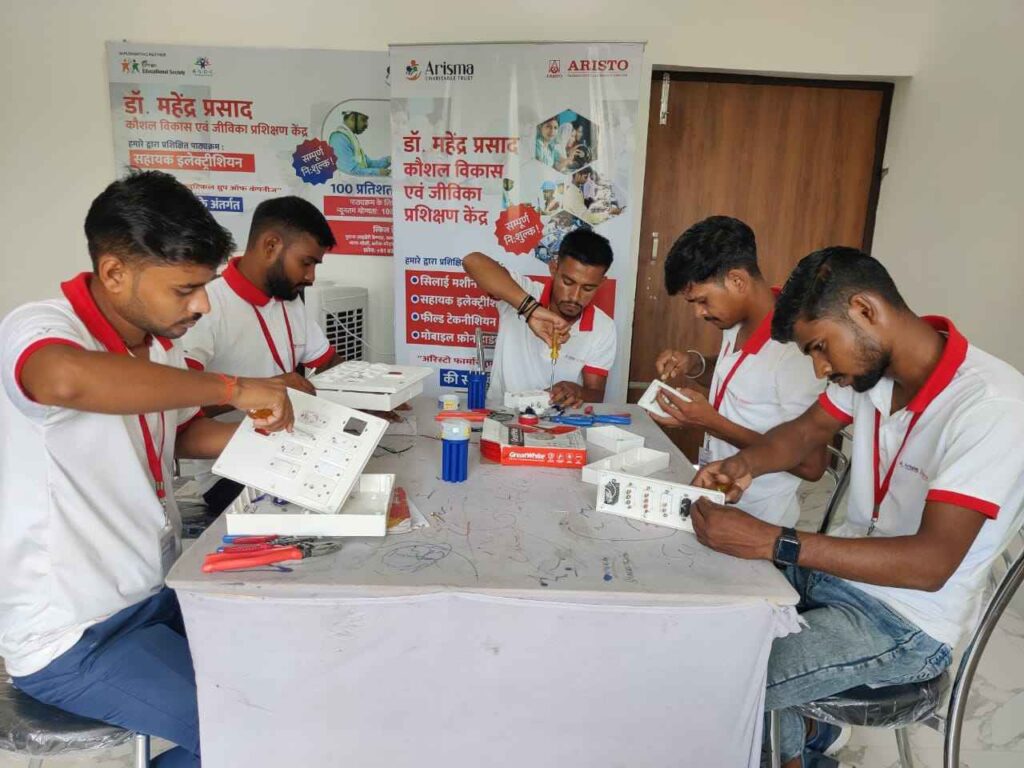
Schedule VII Item (ii) addresses this directly. It covers the promotion of employment-enhancing vocational skills — specifically among children, women, the elderly, and the differently abled — alongside livelihood enhancement projects and special education. The language is unambiguous. Vocational training and skill development are not peripheral CSR activities. They sit at the centre of what Schedule VII was designed to enable.
This is not an interpretation or a grey area. Vocational training, skill development programmes, placement-linked training, and livelihood projects are all valid, clearly defined CSR activities under Indian law. Companies funding such programmes through eligible implementing partners are in full compliance with Schedule VII.
Why Skill Development is One of the Strongest CSR Choices Available
Not all CSR activities produce the same quality of impact — or the same quality of documentation.
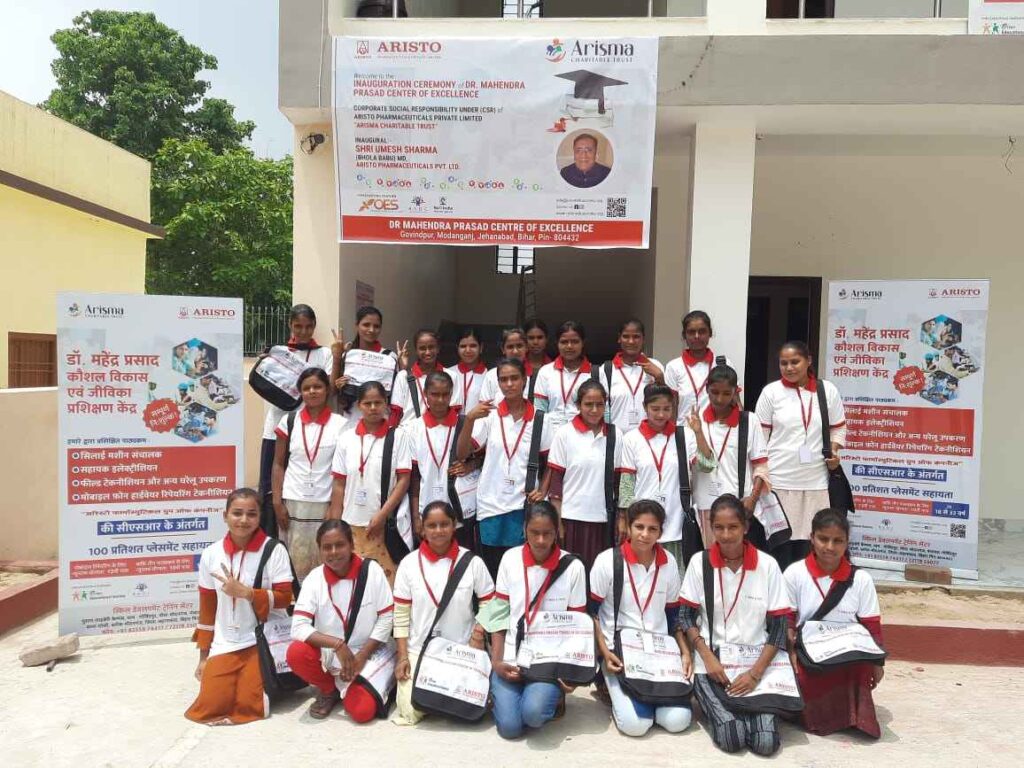
A one-time event leaves behind photographs. A constructed asset leaves behind a building. A skill development programme leaves behind employment records, salary slips, employer contact details, NSQF-aligned certificates with national qualification numbers, and placement data that can be tracked, verified, and reported against.
For CSR teams that face increasing scrutiny from boards, auditors, and the Ministry of Corporate Affairs, that auditability matters.
There are other reasons skill development stands out as a category.
It addresses a structural gap that is well-documented. The PLFS Annual Report 2025 found that just 4.2% of India’s working-age population has received formal vocational training. A CSR programme that moves even a small number of people through credible, placement-linked training is contributing to a national priority with measurable demand.
The outcomes compound over time. A beneficiary who secures employment does not stop generating impact the day the project closes. Their income supports a household. Their employment record builds toward career progression. Their example influences younger siblings and community members. Skill development impact accrues in ways that a one-time intervention cannot replicate.
It aligns directly with ESG and BRSR reporting requirements. The Securities and Exchange Board of India’s Business Responsibility and Sustainability Reporting (BRSR) norms require listed companies to disclose social impact data, including workforce development and livelihood initiatives. A well-documented skill development programme generates precisely the data that BRSR reporting demands.
The Compliance Side: What CSR Teams Must Get Right
The Ministry of Corporate Affairs has progressively tightened CSR compliance requirements. For skill development programmes, the following are non-negotiable.
- Implementing partner registration. Any NGO or implementing organisation receiving CSR funds must be registered under Form CSR-1 on the MCA21 portal. As of July 2025, CSR-1 registration is fully web-based — paper submissions are no longer accepted. The implementing partner must also hold valid 12A and 80G registrations and, where applicable, provide their NGO Darpan ID issued by NITI Aayog.
- CSR Committee requirements. Companies with a CSR obligation of ₹50 lakh or more must constitute a formal CSR Committee of the Board, with at least one independent director. The Committee is responsible for approving the CSR policy, recommending the annual spend, and monitoring implementation.
- Impact assessment mandate. For CSR projects with an outlay of ₹1 crore or more that have been running for at least one year, companies with a CSR obligation of ₹10 crore or more are required to commission an independent impact assessment. This assessment must be conducted by an external agency — not the implementing partner — and the findings must be disclosed in the annual report.
- Unspent CSR accounts. CSR funds not spent by the end of the financial year must be transferred to an Unspent CSR Account within 30 days of the financial year closing. Funds in that account must be spent within three years of transfer, failing which they must be transferred to a designated government fund. Penalties for non-compliance have been strengthened under recent amendments.
- Annual reporting. All CSR expenditure must be disclosed in the company’s annual report and on the National CSR Portal. The report must include details of projects, implementing partners, funds deployed, and outcomes achieved.
Understanding these requirements before selecting an implementing partner is essential. A partner who cannot provide clean CSR-1 documentation, impact reports, and outcome data will create compliance problems for the funding company — not just for themselves.
Choosing the Right NGO Partner: A Framework for CSR Teams
The quality of a CSR skill development programme is almost entirely determined by the quality of the implementing partner. Choosing carelessly is the most expensive mistake a CSR team can make.
Here is what to evaluate — and what to treat as a warning sign.
| What to Look For | Red Flag |
|---|---|
| NCVET Awarding Body status or NSDC empanelment | No national accreditation — only self-certified programmes |
| CSR-1 registered, valid 12A and 80G, NGO Darpan ID | Missing or lapsed registrations |
| Verified placement data with employer contact details | Placement claims without documentation |
| Independent assessment reports from past CSR projects | Only self-reported outcome data |
| Multi-year programme track record in your sector | First-time CSR implementation with no field history |
| Geographic presence in your operating areas | National headquarters, no community presence locally |
| Transparent reporting with quarterly updates | Annual summary reports only |
| Sector-aligned curriculum tied to real employer demand | Generic training content not linked to specific job roles |
One question to ask every potential partner directly: can you show us verified placement data from your last three completed projects, including employer names and contact details?
A credible partner answers this without hesitation. An unreliable one changes the subject.
How to Structure a CSR Skill Development Programme for Maximum Impact
Choosing the right partner is the first decision. The second is designing a programme structure that actually produces the outcomes you intend to fund.
The most common mistake companies make is funding training rather than employment. Training completion is an output. Employment is an outcome. Income sustained over six to twelve months is impact. These are not the same thing, and CSR reporting that conflates them will not survive serious scrutiny.
A well-structured programme specifies all three levels from the outset.
| Level | What It Measures | Example Metric |
|---|---|---|
| Output | What the programme delivered | Number of candidates trained and certified |
| Outcome | What changed as a result | Percentage of trained candidates placed in employment within 90 days |
| Impact | Long-term change in beneficiary lives | Average income increase at 6 and 12 months post-placement |
Beyond measurement, effective programme design includes the following elements:
Placement-linked funding structure. Where possible, tie a portion of the implementing partner’s fee to verified placement outcomes — not just training completion. This aligns the partner’s financial interest with the result you are actually trying to produce.
Defined beneficiary profile. Be specific about who the programme targets. Youth under 25? Women from low-income households? School dropouts in a specific district? The more precisely the beneficiary profile is defined, the more accurately outcomes can be attributed to the programme.
Post-placement support period. The first 90 days of employment are the highest-dropout risk period for first-generation workers. A programme that includes structured post-placement follow-up — check-ins, counselling, employer mediation — significantly improves long-term retention and strengthens your impact data.
Minimum programme duration. Short-term training that delivers a certificate in under two weeks rarely produces durable employment. Programmes of 200–500 hours, designed around NSQF-aligned qualification packs developed with Sector Skill Councils, produce candidates that employers actually want to retain.

Where Orion Educational Society Fits
Orion Educational Society has been implementing skill development programmes since 2006 — well before CSR became a statutory requirement in India.
Today, OES operates across 29 states with more than 100 training centres, having trained over 1,37,000 beneficiaries across sectors including hospitality, retail, BFSI, beauty and wellness, IT literacy, and construction trades.
For corporate CSR partners, OES offers a specific combination of credentials that addresses the compliance and impact requirements outlined above:
- NCVET Awarding Body — authorised to design, assess, and certify NSQF-aligned qualifications nationally
- NSDC partner organisation — aligned with India’s National Skill Development Corporation framework
- CSR-1 registered — fully compliant with MCA implementing partner requirements
- 12A / 80G / NGO Darpan registered — all mandatory documentation in order
- Independent impact reporting — outcome data provided quarterly with placement verification
- 29-state operational reach — programmes can be designed to align with a company’s geographic presence and CSR local area preference
Existing corporate partnerships with HDFC Parivartan, ITC, and NPCI Bharat BillPay reflect the kind of long-term, structured CSR relationships that produce documented, multi-year impact — not one-time spends.
For companies looking for an implementing partner that can handle programme design, community mobilisation, training delivery, placement support, and impact documentation under a single accountability structure, OES’s field infrastructure and regulatory standing make it a credible option to evaluate.
Common Mistakes Companies Make With CSR Skill Development Spend
These are the errors that produce unspent balances, audit observations, and impact reports that cannot be defended.
- Funding training events instead of programmes. A two-day workshop is not a vocational training programme. It produces attendance certificates, not employed workers. Schedule VII compliance requires genuine livelihood development — not awareness sessions packaged as skill training.
- Choosing partners without verifiable credentials. NCVET recognition and NSDC empanelment are not optional quality filters. They are the difference between a nationally credible certification and a locally printed document that employers cannot verify.
- Not defining impact metrics before funds are released. If you do not specify what outcomes you expect before the programme begins, you cannot hold your partner accountable for delivering them. Define placement targets, income benchmarks, and retention timelines in the grant agreement — not in the closure report.
- Geographic mismatch with company operations. Section 135 gives preference to local areas where the company operates. Funding a programme in a state with no connection to your business weakens your compliance rationale and makes impact attribution harder to defend.
- Treating CSR as a single-year exercise. Skill development impact compounds over time. A three-year programme with a consistent implementing partner produces measurably better outcomes — and better reporting — than three separate one-year projects with three different organisations.
What Effective CSR Skill Development Comes Down To
India’s CSR mandate has matured significantly since 2014. The era of ad hoc giving and unverifiable impact claims is closing. Boards, auditors, SEBI’s BRSR framework, and the MCA’s strengthened compliance requirements are all pushing in the same direction — toward documented, outcome-linked, multi-year social investment.
Skill development, when implemented through a credible partner with national accreditation, NSQF-aligned curriculum, and placement-linked accountability, produces exactly the kind of outcomes that this environment demands.
The ₹40,794 crore that Indian companies spent on CSR in FY 2024–25 represents an extraordinary collective resource. The question worth asking is not how much of it went toward skill development — but how much of what went toward skill development actually produced employment.
That gap between spend and outcome is where the real work happens. And it is the work that Orion Educational Society has been doing, state by state and community by community, for eighteen years.
Is skill development a valid CSR activity under Schedule VII?
Yes, explicitly. Schedule VII Item (ii) of the Companies Act, 2013 directly covers employment-enhancing vocational skills, livelihood enhancement projects, and special education — particularly for women, children, the elderly, and the differently abled. It is one of the most clearly defined eligible activities in the legislation.
What documents must an NGO have to be a valid CSR implementation partner?
At minimum: CSR-1 registration on the MCA21 portal, valid 12A and 80G registrations, and an NGO Darpan ID from NITI Aayog. For skill development specifically, NCVET Awarding Body status or NSDC empanelment adds a further layer of programme credibility that compliance teams and auditors will look for.
How do we measure the impact of a CSR skill development programme?
Measure at three levels — output (candidates trained and certified), outcome (percentage placed within 90 days), and impact (income and retention at 6 and 12 months). For projects above ₹1 crore, an independent third-party impact assessment is legally required for companies with CSR obligations of ₹10 crore or more.
Can we fund training programmes in states where we don’t operate?
Yes, with a clear rationale. Section 135 gives preference to local areas where the company operates, but national programmes are permissible. The geographic scope must be documented in your CSR policy and disclosed in the annual report to satisfy MCA requirements.
What is the difference between a CSR implementation partner and a vendor?
A vendor supplies goods or services commercially. An implementation partner receives funds to deliver social development activities under a structured agreement with defined outcomes and reporting obligations. Only registered implementation partners qualify under CSR rules — payments to vendors do not count as CSR expenditure.
How do we report CSR skill development spend in our annual report?
The annual report must include project details, implementing partner names, funds deployed, and outcomes achieved. Any unspent amount goes to an Unspent CSR Account within 30 days of year-end. Projects above ₹1 crore with mandatory impact assessments must include assessment findings. All disclosures must also be submitted to the National CSR Portal.