India enters 2026 with a paradox at the centre of its labour market story.
On one hand, the country holds one of the youngest populations in the world — over 65% of Indians are under 35, and the working-age population is projected to rise from 62% to 68% by 2030. On the other, the Periodic Labour Force Survey (PLFS) Annual Report 2025, released by the National Statistical Office (NSO), found that just 4.2% of workers aged 15–59 have received any formal vocational or technical training. Youth unemployment for the 15–29 age group stands at 9.9%, and an estimated 25% of young people are classified as NEET — Not in Employment, Education, or Training.
The arithmetic is stark: India is adding millions of young people to its labour force every year, but the formal skilling infrastructure is not reaching most of them in time or in depth.
Government programmes have made genuine progress. The Pradhan Mantri Kaushal Vikas Yojana (PMKVY) has trained over 1.42 crore individuals since its launch in 2015. The Union Budget 2025-26 allocated Rs. 6,100 crore to the Ministry of Skill Development and Entrepreneurship — a significant increase from previous years. These are not small efforts.
Yet the gap persists. And the reason it persists is precisely where skill development NGOs in India have become indispensable.
This article examines the scale of India’s employment gap in 2026, the structural limits of government skilling programmes operating at national scale, and the specific, evidence-based ways that NGOs are reaching communities and delivering outcomes that policy alone cannot produce.
Table of Contents
Understanding the Employment Gap: What the Data Actually Shows
The phrase “employment gap” is used loosely in public discourse. In the context of India’s skilling challenge, it refers to at least four distinct problems that often get conflated.
The Formal Training Deficit
India’s formal skilling coverage is critically thin. According to the PLFS Annual Report 2025, only 4.2% of the working-age population (15–59) has ever received formal vocational or technical training. A separate analysis from the India Skills Report 2025 found that just 21% of youth aged 15–29 had undergone any vocational or technical training — formal or informal — in their lifetime.
Compare this with Germany, where over 70% of workers pass through a structured vocational education and training (VET) pathway. Even in South Korea and Japan, formal skilling rates exceed 60%. India’s demographic dividend risks becoming a demographic liability without a dramatic scaling of structured vocational preparation.
The Employability Mismatch
Training and employability are not the same thing. The India Skills Report 2026, prepared by ETS, CII, AICTE, AIU, and Taggd, found that overall employability among Indian youth has risen to 56.35% — an improvement of nearly 10 percentage points over four years. That progress is real and should be acknowledged.
But the obverse is equally true: more than 43% of India’s youth are still not considered job-ready by industry standards. Among the specific issues that employers consistently report:
- Weak communication and professional English skills
- Absence of critical thinking and problem-solving ability
- Inadequate digital literacy, even for non-technical roles
- Poor collaboration and workplace conduct awareness
These are precisely the gaps that a 30-day certificate course cannot close — and the gaps that well-designed NGO programmes, built on sustained engagement, are positioned to address.
The Rural-Urban Divide
India’s skill gap is not uniform. It falls hardest on rural youth, first-generation learners, and women from low-income households.
State-level data reveals the depth of this disparity. According to PLFS data from 2025, youth unemployment varies dramatically — from 3.2% in Madhya Pradesh to 29.9% in Kerala (among the 15–29 age group) — reflecting how local economic structures, migration patterns, and educational infrastructure create widely different employment landscapes within the same country.
Rural youth, particularly those who have dropped out before completing Class 12, face a compounded disadvantage: they lack both the educational credentials for formal employment and access to training centres that are typically concentrated in district towns and urban areas.
The Placement-to-Training Conversion Problem
Perhaps the most consequential gap is between training completion and actual job placement. Analysis of government short-term skill programmes suggests that only 10–23% of trainees from public skilling schemes secure employment after completing their certified courses. The reasons are structural: training content that doesn’t reflect local employer demand, no post-training support, no industry relationships at the local level, and no follow-up mechanism once certification is issued.
This is where the distinction between scale and depth becomes critical — and where NGOs operating at the community level demonstrate a measurable advantage.
What Government Programmes Do Well — and Where They Reach Their Limits
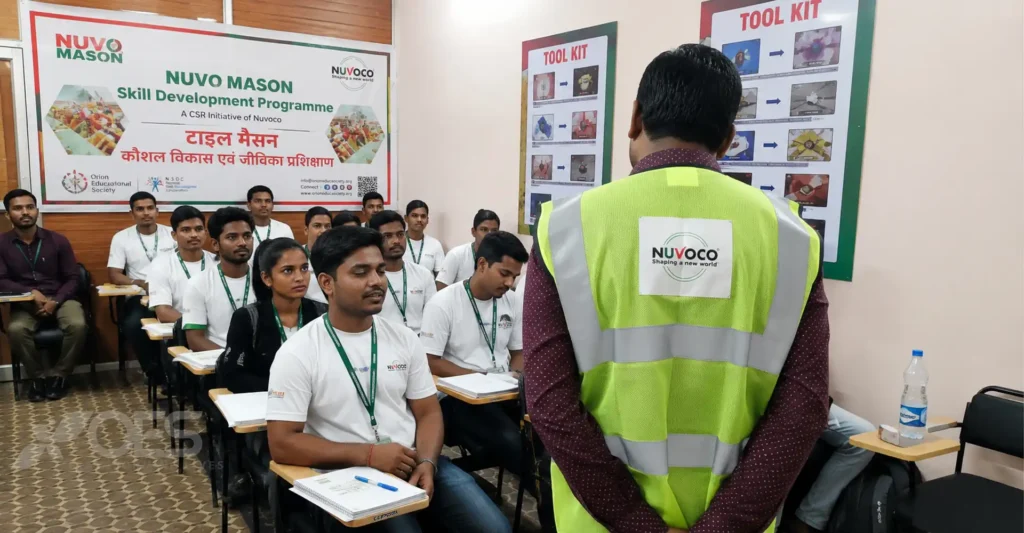
This article is not a critique of government skilling initiatives. Programmes like PMKVY, DDU-GKY, Jan Shikshan Sansthan (JSS), and the National Apprenticeship Promotion Scheme (NAPS) have collectively trained millions of people and improved the quality of India’s skilling infrastructure. The Skill India Digital Hub represents a genuine effort to use technology for scale.
The Government of India’s commitment to skilling is also reflected in funding: the MSDE budget allocation of Rs. 8,800 crore for the Skill India Programme (SIP) from 2022-23 to 2025-26, with a further increase to Rs. 6,100 crore in Budget 2025-26 alone, demonstrates continued investment at the policy level.
However, large-scale government programmes face inherent structural constraints that are not a failure of intent — they are the natural limits of any administrative system operating at national scale:
Geographic reach: Training centres and scheme enrolment systems work best where infrastructure exists — cities, district headquarters, and areas with digital connectivity. The most underserved communities are often the last to be reached.
Standardised curriculum: National programmes must operate with standardised content to function at scale. This makes adaptation to hyperlocal employer demand difficult. A training module designed for retail jobs in Chennai may not be relevant for a youth in rural Jharkhand.
Limited post-training support: Government schemes are typically designed to deliver and certify. Sustained post-placement follow-up, mentorship, and reskilling support are difficult to build into centralised systems.
Community trust: In many rural and semi-urban communities, first-generation learners and their families are more likely to trust a local organisation with demonstrated presence than a government portal or distant training centre.
These are not deficiencies — they are the natural characteristics of operating at national scale. They create the space where NGOs perform their most valuable function: providing depth where policy provides reach.
The Role of Skill Development NGOs: Depth, Trust, and Last-Mile Delivery
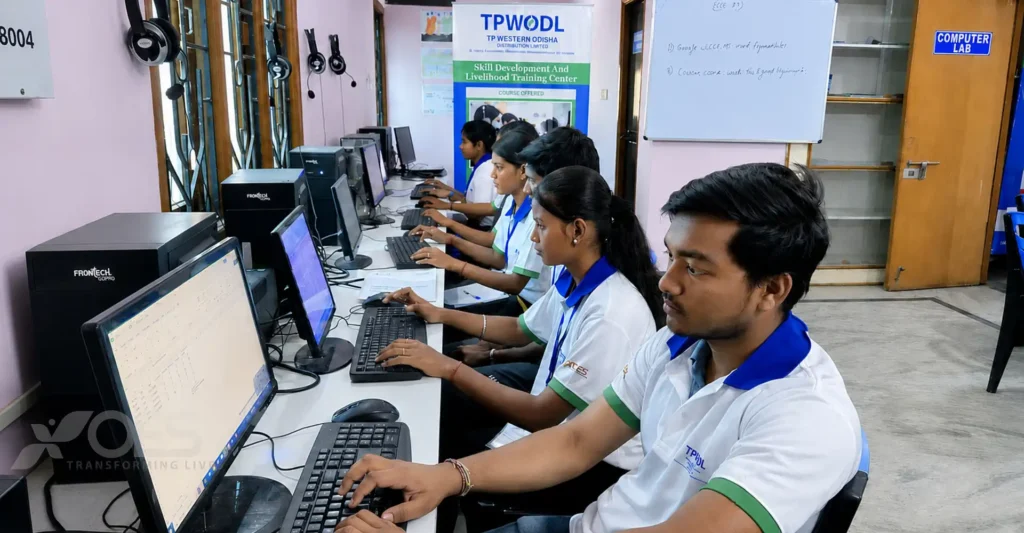
Across India, an estimated 1,648 NGOs and social enterprises are registered as working in the skill development sector. They range from small community organisations serving a single district to larger federated bodies operating across multiple states.
What distinguishes NGOs from government training systems is not the content of their courses — many NGOs implement government schemes, including PMKVY and DDU-GKY — but the manner of delivery, the community embeddedness, and the sustained relationships they build with both learners and local employers.
The specific contributions of skill development NGOs can be grouped into four areas:
Reaching Communities That Formal Systems Miss
Government skilling infrastructure is improving, but the last mile — reaching tribal communities, migrant families, urban slum residents, women who cannot travel, and rural youth who have dropped out of formal education — remains persistently difficult to cover through centralised systems.
NGOs that have been present in a community for years, that have local staff who speak the community’s language and understand its concerns, reach these populations in ways that state-administered enrolment systems cannot replicate. The community trust that NGOs build through sustained presence is an asset that takes years to develop and cannot be created by policy notification.
Contextualising Training to Local Labour Markets
A skill development NGO with genuine field presence knows which factories in the surrounding district are hiring, what the local hospitality industry needs, and which trades have emerging demand in the region. This knowledge allows NGOs to design or adapt training content around actual, proximate employment opportunities — dramatically improving placement outcomes.
Where a government scheme may certify someone in a skill that has no demand within a reasonable commute, a locally-embedded NGO works backward from available jobs to design the training needed to fill them.
Providing Post-Training Employment Support
Placement is not the end of the employment journey — it is the beginning. Many first-generation workers, particularly from rural backgrounds and marginalised communities, drop out of their first jobs within weeks due to workplace adjustment challenges: unfamiliar professional environments, difficulty navigating city life, communication barriers, or family pressure.
NGOs that maintain post-placement contact — check-ins, counselling, peer support networks, and employer mediation — significantly improve long-term employment retention. This kind of sustained support cannot be built into a government certification scheme, but it is the difference between a statistic and a livelihood.
Bridging the Soft Skills Gap
The India Skills Report 2026 identifies soft skills — communication, problem-solving, teamwork, adaptability — as the most persistent deficiency among youth entering the job market, including those who have completed vocational training. Technical certification tells an employer that someone can complete a task. Soft skills tell them that the person can work in an organisation.
Well-designed NGO programmes integrate life skills, financial literacy, workplace conduct, and communication training alongside technical content. This holistic model, while harder to certify or count, is what drives durable employability.
Orion Educational Society: 18 Years of Field Evidence from 29 States
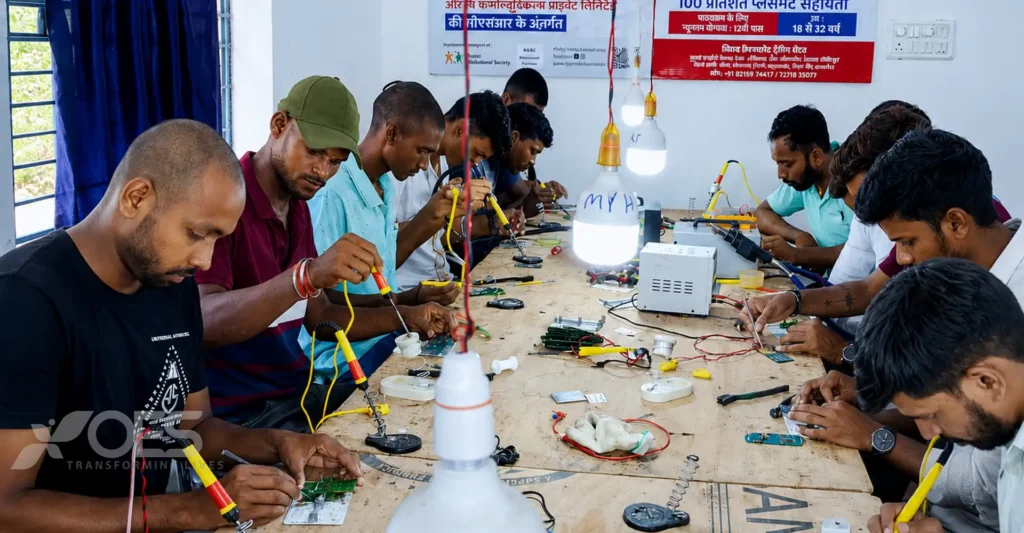
Orion Educational Society (OES) has been working on skill development and vocational training since 2006. What began as a grassroots initiative to equip disadvantaged youth with employable skills has grown into one of India’s largest NGO-led skill development networks, now operating across 29 states, with over 100 training centres and more than 1,37,000 beneficiaries trained.
OES holds recognition as an NCVET Awarding Body — one of a limited number of non-governmental organisations in India authorised by the National Council for Vocational Education and Training to award recognised qualifications. This is not a procedural detail: it reflects the quality assurance framework, curriculum standards, and assessment rigour that OES applies to its programmes.
Programme Design: Sector-Aligned, Community-Rooted
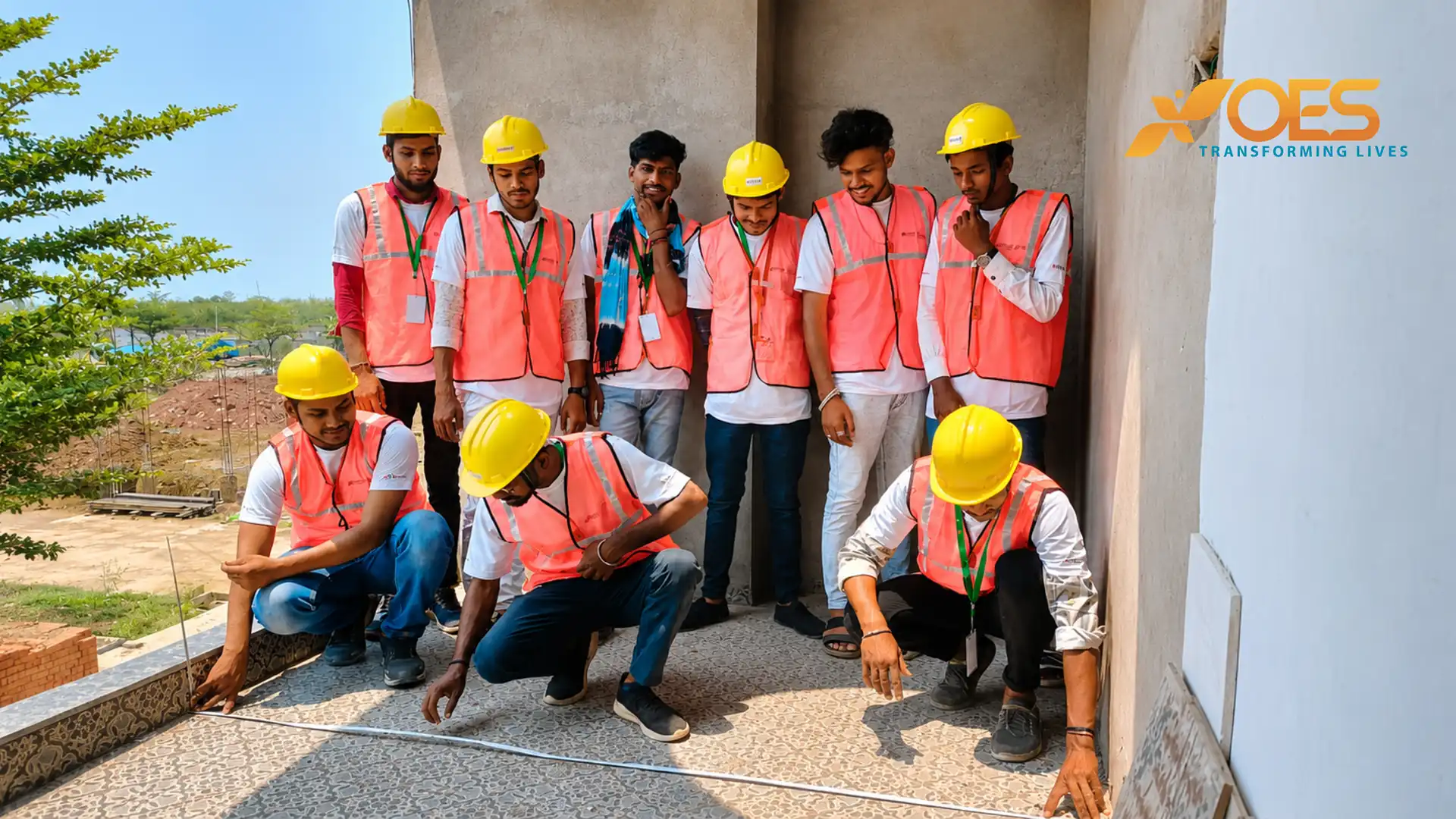
OES programmes span sectors where India’s employment demand is proven and growing: hospitality, retail, BFSI (banking, financial services, and insurance), IT and digital literacy, beauty and wellness, and construction trades. Each programme is designed in alignment with NSDC-approved qualification packs and local industry consultation, ensuring that what trainees learn corresponds to what employers are actually hiring for.
The WIDP (Women’s Integrated Development Programme) extends this approach to rural women’s communities, combining livelihood skills with self-help group formation, digital banking literacy, and community leadership development. This model addresses not just individual employment but household economic resilience — a fuller understanding of what “closing the employment gap” means at the family level.
What 18 Years of Field Work Shows
Working across 29 states over nearly two decades, OES has observed patterns that rarely appear in national surveys:
- The distance barrier is real and underestimated. For women and for rural youth from lower-income households, a training centre that requires more than 5 kilometres of travel — especially without reliable public transport — effectively does not exist. OES has built its centre network around this insight, prioritising proximity over consolidation.
- Families need to see early outcomes. In low-income households, the decision to allow a family member to spend time in training rather than earning is an economic sacrifice. Programmes that deliver early, tangible income — even part-time work during training — significantly reduce dropout rates and increase family support.
- Employer relationships must be built before training begins. Reverse-engineering training content from known employer demand, rather than training and then seeking placements, produces placement rates that are meaningfully higher than national averages for short-term training.
- Women’s participation requires more than enrolment. Female employment retention requires that training addresses safety concerns, provides travel support where needed, involves families in the programme rationale, and connects women with peer networks that extend beyond the training period.
Partnerships That Multiply Impact
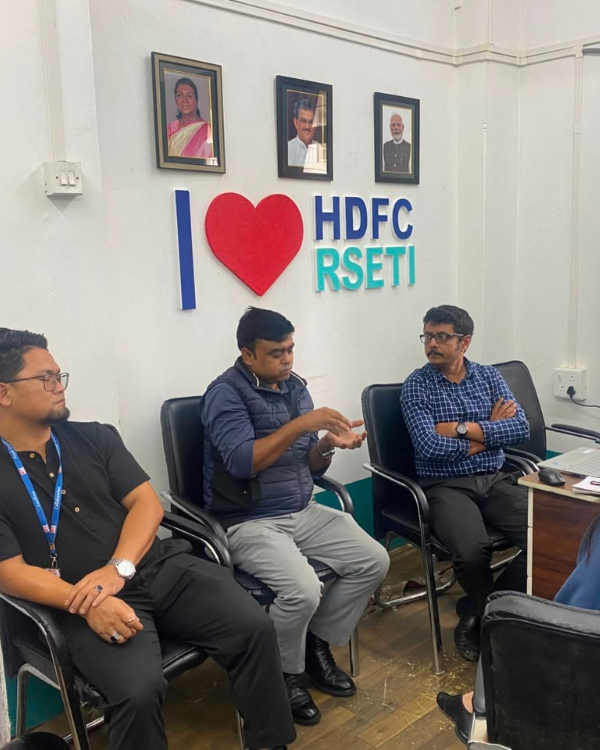
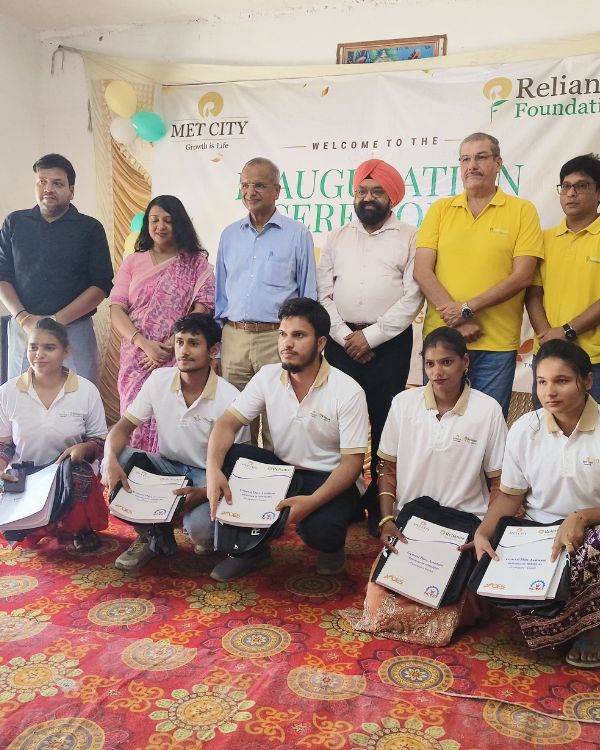
OES has established partnerships with government departments, industry, and CSR programmes including HDFC Parivartan, ITC, and NPCI Bharat BillPay. These partnerships are not incidental — they reflect the model of triangulation between NGO implementation capacity, government frameworks, and corporate resources that is increasingly recognised as the most effective architecture for scaled skill development in India.
The endorsement of OES programmes by the Government of Maharashtra, including recognition by the Chief Minister’s office, reflects the productive complementarity between NGO delivery and government policy that, at its best, achieves outcomes neither can produce independently.
The Sectors Where NGO-Led Skilling Matters Most in 2026
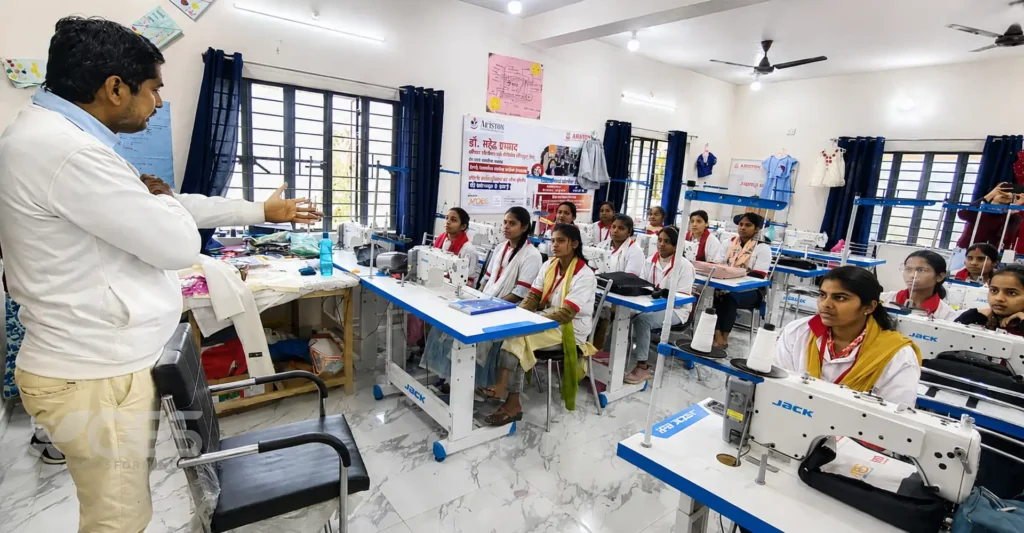
The landscape of employment in India is shifting. Automation, digital transformation, and the rise of the gig economy are reshaping which skills employers need and which jobs will generate stable incomes over the next decade. For skill development NGOs, this creates both new imperatives and new opportunities.
Hospitality and Tourism
India’s hospitality sector continues to generate significant entry-level employment and is among the most receptive to candidates from vocational training backgrounds. NGOs with established hospitality curricula and industry partnerships are well positioned to channel trained youth into roles where employers actively value demonstrated practical skills over formal degrees.
Retail and BFSI
The rapid expansion of organised retail and the formalisation of financial services — particularly in Tier-2 and Tier-3 cities — has created sustained demand for customer-facing workers with communication skills, digital literacy, and product knowledge. These are sectors where 2–3 month vocational programmes have demonstrably high placement rates when designed in close partnership with employers.
Green and New Economy Skills
India’s renewable energy targets and the government’s manufacturing push under programmes like the Production Linked Incentive (PLI) scheme are creating new demand for technically skilled workers in solar installation, electric vehicle servicing, and manufacturing trades. This is a frontier where NGOs with existing community networks and training infrastructure can expand into emerging demand before formal training institutions catch up.
Digital Literacy as a Baseline
Across all sectors, digital literacy — the ability to use a smartphone competently, navigate banking applications, communicate via email, and use basic productivity tools — has become a non-negotiable baseline for formal employment. NGOs working with first-generation workers, particularly in rural areas, have an important role in building this foundation before or alongside sector-specific training.
The Unfinished Business: Challenges That Remain
Acknowledging the contributions of skill development NGOs requires equal honesty about the challenges the sector has not yet fully resolved.
Quality variance is significant. The category “skill development NGO” encompasses organisations of vastly different quality, rigour, and intent. Weak quality controls, inadequate trainer capacity, and programmes designed to fulfil funding requirements rather than create employment are real problems that the sector must address collectively.
Certification alone is not enough. India has gotten better at issuing skill certificates. It has not yet built the employer-recognition infrastructure that makes those certificates genuinely useful to hiring managers. NCVET recognition is a meaningful step, but building universal employer trust in NGO-issued qualifications requires sustained industry engagement over time.
Women’s post-placement retention remains a critical gap. Female employment dropout rates — driven by family pressure, workplace safety concerns, inadequate childcare, and the absence of women’s peer networks in workplaces — mean that training completion rates for women do not translate proportionally into sustained employment. This is the sector’s most important unsolved problem in 2026.
Rural-urban migration and its consequences. Many young people trained for urban employment move to cities without adequate settlement support. When those placements break down — as they often do for first-generation urban workers — the individual returns to the village with reduced confidence and family trust in skilling programmes damaged. Better coordination between training providers and urban support systems is an urgent need.
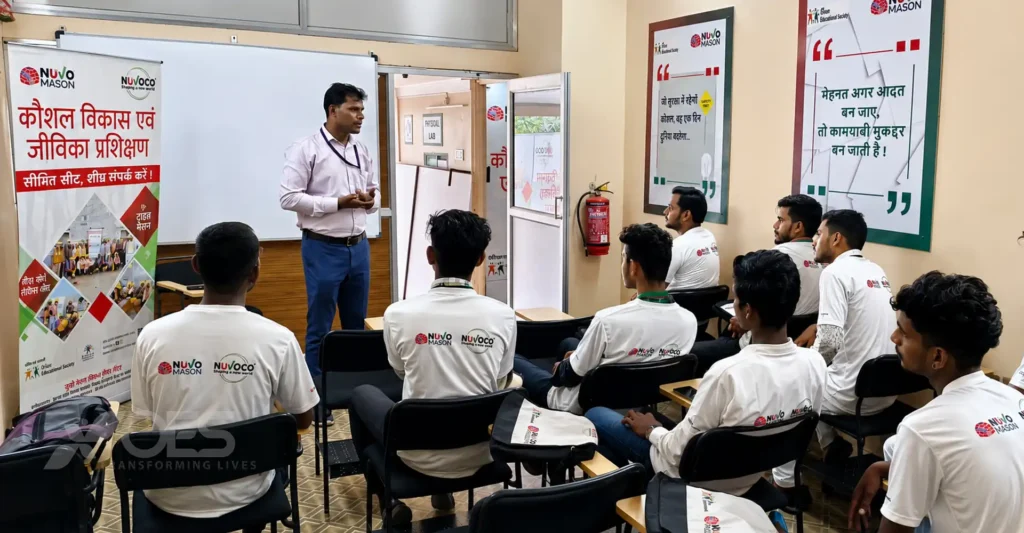
What Effective Skill Development NGOs Do Differently: A Framework
Based on field evidence from India’s most effective skill development interventions, the characteristics that distinguish programmes with durable employment outcomes from those that merely generate certificates can be summarised as follows:
| Characteristic | Low-Impact Programme | High-Impact Programme |
|---|---|---|
| Training design | Standard national module, unchanged | Adapted to local employer demand |
| Employer engagement | Post-training placement effort | Employers involved before training begins |
| Trainee profile | Whoever enrols | Targeted outreach to most underserved |
| Programme duration | Minimum required for certification | Duration matched to skill complexity |
| Soft skills | Absent or incidental | Integrated throughout training |
| Post-placement support | None | Regular follow-up for 6–12 months |
| Family engagement | None | Active — especially for women trainees |
| Data systems | Enrolment and certification only | Placement, retention, and income tracked |
Programmes that score well across most of these dimensions, regardless of their geographic scale, consistently achieve placement and retention outcomes that outperform national averages.
Sources and References:
- Periodic Labour Force Survey (PLFS) Annual Report 2025, National Statistical Office, MoSPI, Government of India
- India Skills Report 2026, ETS, CII, AICTE, AIU and Taggd
Conclusion: The Role That NGOs Must Continue to Play
India’s employment gap in 2026 is not a problem that will be solved by any single intervention. It requires a sustained, multi-actor effort — the scale of government, the resources of industry, the research capacity of institutions, and the community presence of civil society.
The data is clear on what this combination produces when it functions well. Employability is improving — the India Skills Report 2026 records a rise to 56.35%, a significant gain. Unemployment, while still structurally high among youth, is at its lowest annual level in eight years according to the PLFS 2025. More women are participating in the labour market than at any point since formal measurement began.
But 4.2% formal vocational training coverage in a country of 1.4 billion people is not progress enough. A 25% NEET rate among youth is not a statistic — it is a generation at risk of missing the window in which skills compound into careers.
Skill development NGOs in India are not a temporary solution while formal systems catch up. They are a permanent feature of an effective skilling ecosystem — reaching where governments cannot, building trust where institutions cannot, and sustaining relationships with trainees, families, and employers over the years it takes to convert a training certificate into a lasting livelihood.
At Orion Educational Society, this is work we have carried out for 18 years, across 29 states, with more than 1,37,000 people whose employment changed the trajectory of their families. There is much further to go. We remain committed to going there.
What is the difference between a skill development NGO and a government training centre?
Government training centres operate under standardised national curricula administered through state or central systems. Skill development NGOs work within the same frameworks but add community-level engagement, local employer relationships, family support, and post-placement follow-up that centralised systems cannot routinely deliver. The most effective models combine both — NGOs as implementing partners within government-funded schemes.
Are NGO skill certificates recognised by employers?
Recognition depends on the accreditation framework behind the certificate. NGOs empanelled with NSDC or recognised as NCVET Awarding Bodies issue qualifications with formal national standing. Employer acceptance of these credentials is growing as India’s National Skills Qualification Framework matures, though formal degrees retain stronger recognition in most sectors for now.
Which sectors have the highest placement rates for vocationally trained youth in India?
Hospitality, organised retail, BFSI, beauty and wellness, and construction trades consistently show strong placement rates for certificate holders. These sectors have established hiring channels for vocationally trained candidates and value demonstrated practical skills. IT and digital roles carry high demand but require longer training periods and stronger foundational competencies.
How do skill development NGOs fund their programmes?
The primary sources are CSR funding under Schedule VII of the Companies Act, government scheme funding through NSDC and state skill missions, and international development grants. Larger NGOs typically operate across multiple funding streams, which improves programme continuity and reduces dependence on any single source.
What does placement-linked training mean?
It is a model where funding and performance assessment are tied to verified employment outcomes rather than enrolment or certification numbers. Training organisations are accountable for actual job placement — and often for retention over three to six months. This directly improves alignment between training content and real employer demand.
How can a company’s CSR team partner with a skill development NGO?
CSR teams typically look for NGOs with verified placement outcomes, transparent impact reporting, NSDC empanelment or NCVET recognition, and geographic or sectoral alignment with their mandate. A credible partner provides programme design, beneficiary selection, training delivery, placement support, and quarterly impact documentation. To explore a partnership with OES, visit our CSR Partnership page.